
When we think of the Ottomans, we think of turbaned sultans, fierce conquerors and powerful janissaries. Yet — as in most cases — behind these images lies the story of extraordinary women who have been overlooked.
Kösem was one such woman. Born in the year 1589, Kösem was baptised Anastasia, a Christian girl from the Balkans. Though her nationality is unknown, various sources claim that she was of Bosnian, Greek or Circassian heritage.
Either way, Kösem was probably destined for a life similar to other women of her time. Her main purpose would have been as a wife, mother and homemaker. If her husband required, she would also have had to assist him in his work, whether it was by baking bread or sowing seeds in the field.
Yet, Anastasia’s life was to be radically different to the girls she grew up with in her village. At a young age — probably 11–14 — she was captured by slave traders. She found herself living in the palace of the beylerbeyi (governor-general) of the province of Bosnia, then under Ottoman rule.
While working as a domestic slave, Anastasia’s beauty and intelligence were quickly noticed, and the governor-general sent her to the Topkapi Palace (Istanbul), where the Sultan resided. Like many before her, she was gifted to the Sultan by somebody who desired the ruler’s approval and good graces.
The Ottoman Harem
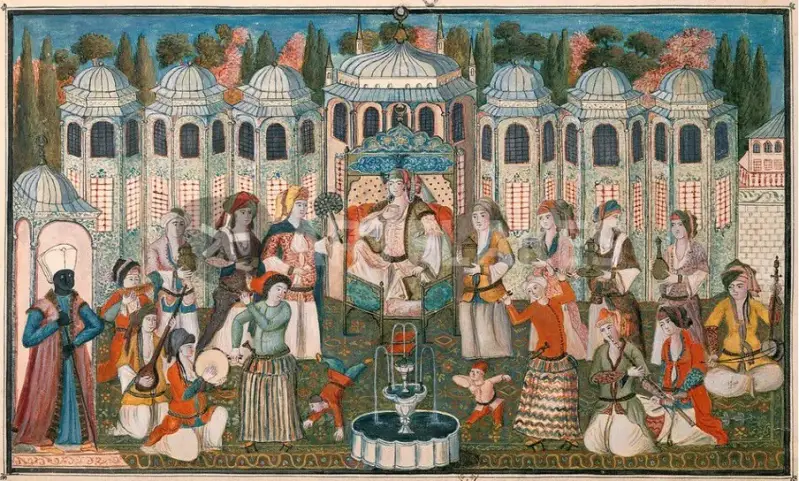
Late 17th century garden party, hosted by the Valide Sultan for Madame Girardin,
wife of the French Ambassador. Source: Bibliothèque Nationale
After arriving at Topkapi Palace, Anastasia was sent straight to the harem, the area of the palace where all females, whether they were royalty or servants, resided. Here, the valide sultan or ‘queen mother’ was the ultimate authority. It was she who ran the complex harem economy, overlooked the girls’ education, and chose the future queens of the empire.
Anastasia was renamed Mahpeyker, meaning moon-faced or beautiful in Persian. She excelled in her education in fields like literature, mathematics and music. This, in addition to her sought-after porcelain complexion and big brown eyes, made her stand out as a good candidate for future mother of an Ottoman prince.
Mahpeyker was also a natural leader. Despite her young age, she would guide the other girls of the harem. Due to this, she was given the moniker Kösem, a term referring to a ram that shepherds would use to lead herds of sheep. Little did they know that this controlling and influential side of Kösem would later make her the most powerful woman in Ottoman history.
The new haseki
At the age 14 or 15, Handan Sultan recommended Kösem to her son, Sultan Ahmed I. The two quickly developed strong feelings for each other, evidenced by their letters that have been found in the Topkapi Palace Archives. She soon after became his haseki, or chief consort, granting her a whopping salary of 1000 aspers per day.
Kösem was not only pretty, but had a lively spirit, which was a breath of fresh air for the Sultan who was overwhelmed with political and administrative burdens. She often relieved these burdens by giving him advice on political issues, although Ahmed was — according to Venetian ambassador Contarini — afraid that he would be considered, like his father, to be “ruled by a woman”.
Kösem’s influence soon became common knowledge, and in the true spirit of 17th-century sexism, many were displeased that a woman, particularly one so young, was “interfering” in imperial politics. The English envoy Thomas Roe (d.1644), for instance, noted that she “governed” the Sultan. Contarini, however, stated that “she restrains herself with great wisdom from speaking to the sultan too frequently of serious matters and affairs of state.”
“she restrains herself with great
wisdom from speaking to the sultan
too frequently of serious matters
and affairs of state.”
Kösem’s influence, however, was stifled by the valides, both Ahmed’s grandmother Safiye Sultan and his mother Handan. A mini power struggle between the women resulted in the grandmother or büyük valide (literally, ‘big mother’) Safiye being banished to the Old Palace in 1604. A year later, the Sultan’s mother died, leaving Kösem as the highest-ranking woman in the harem by the age of 17.
In the absence of these domineering women, the ambitious Kösem took charge of the harem. Firstly, she gained the trust and affection of the other women, especially the younger concubines. Yet, ultimate power lay with the Ottomans’ elite fighting force, called the janissaries, whose military capacity made them a valuable ally. Kösem soon became allies with Mustafa Agha, the leader of the janissaries.
Her ultimate power move, however, was that she was eventually married — and therefore technically freed from slavery — by Sultan Ahmed. The couple had 13 children together, four of whom were sons. This put Kösem in first place for a spot as the future valide sultan.
Kösem and Court Politics
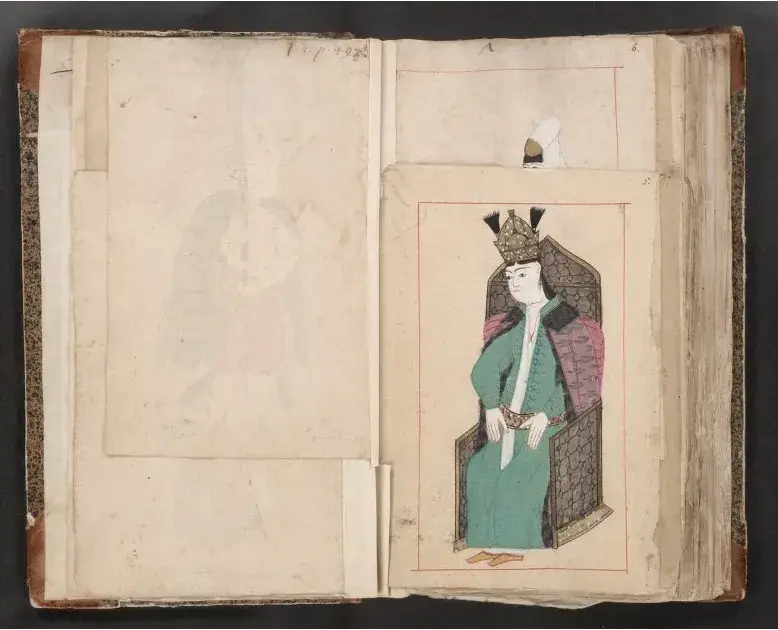
Miniature of Kösem, acquired by Swedish envoy Claes Ralamb (d.1698), ca. 1657,
Source: Library of Congress
In the early 17th century, the Ottoman court was faced with several issues. Losses in wars against European powers had drastically affected Ottoman prestige and self-image. Harem politics became volatile as valides and Hasekis competed for power and influence often referred to — in a disparaging tone — as the “Sultanate of Women”. Added to this was the introduction of child sultans (beginning with Ahmed I).
Kösem was introduced to this volatile world when she entered the palace and witnessed the old Valide Sultan Safiye being banished. Yet, instead of being crushed by this system, she adapted to it. Kösem gained the respect of the Valide Handan Sultan and mothered Ahmed’s children — from his other concubines — , treating them kindly.
She likewise maintained a good relationship with Ahmed’s half-brother Mustafa and convinced the Sultan not to have his brother killed. This would later benefit her children; Should Mustafa come to the throne one day, he would be merciful towards Kösem’s sons and not institute the policy of fratricide, where a Sultan would have his brothers executed to ensure political unity.
Following the death of Ahmed in 1617, his half-brother Mustafa was indeed declared Sultan. However, due to Mustafa’s questionable mental state, he was replaced by Ahmed’s son Osman II. Osman’s efforts to institute state and military reforms gained him many enemies, and at 18 years old, he was imprisoned and murdered. Mustafa once again acceded to the throne. This time, however, it was Kösem who would put an end to his reign.
Becoming the next valide
To ensure both her and her children’s security, Kösem wanted her son Murad to become sultan. She achieved this goal by gaining the support of courtiers and viziers. In 1623, Murad IV became sultan at age 11. Since he was a minor, his mother Kösem had to take power. For the first time in 300 years of Ottoman rule, a woman assumed the official title of regent.
Kösem was an apt political player. She attended the divan meetings — albeit from behind a screen — during which the viziers discussed important state affairs. She also was in correspondence with foreign ambassadors and statesmen. Her kira , or agent, was a Jewish woman who would often write her letters for her and represent the valide in meetings with male dignitaries or tradesmen.
Yet Kösem’s regency was rocked by political and economic instability. Uprisings, raids and wars threatened the Ottoman state throughout the 17th century. Economic issues also arose due to a loss of territories like Baghdad and the plague in Egypt, which was a major revenue source for the Ottoman state.
Despite Kösem’s efforts in battling inflation and appeasing the dissatisfied janissary troops, her son Murad had come to see his mother’s power in a negative light. After 9 years of rule, Kösem was distanced from power by her son. Her most loyal courtiers and companions were also removed from power and replaced by individuals who supported Murad.
The end of her power?
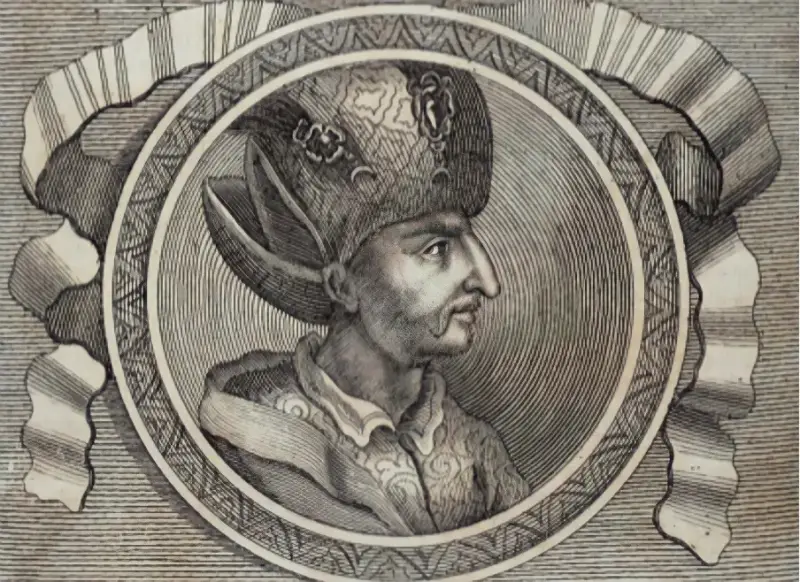
Engraving of Ibrahim I (“The Mad”), by English diplomat Paul Rycaut, ca. 1694,
Source: Wikimedia Commons
Kösem’s ambitious nature would not allow her to lead a life removed from political power. When her son went on military campaigns, she was formally left in charge of the empire. In addition to running the harem, she advised her son on important political issues like executions and diplomatic proceedings.
When Murad fell ill, the Ottomans realised that their state was in serious threat of ending. The Sultan had executed all but one of his four brothers: Ibrahim “the Mad”. Kösem had managed to dissuade Murad from executing Ibrahim, arguing that he was mentally ill and therefore not a threat to Murad’s power. As a result, on Murad’s death in 1640, Ibrahim was declared Sultan. Kösem once again became the valide, this time exercising power over a mentally unstable adult son.
But she had not factored in how Ibrahim’s mental instability would play out. The Sultan’s erratic personal relationships, his lustful obsession with women and his tendency to act violently when displeased were among some of the factors that made him unpopular in court. Kösem, like the religious and political elite, believed that getting rid of Ibrahim would be beneficial to the state. In his youth, Ibrahim had lived under house arrest in the kafes (a restricted part of the Harem) and was paranoid about being assassinated. Though he was now free, this fear became a reality when Kösem conspired to have him removed from power. Although it is said that she only wished for him to be imprisoned in the kafes, he was eventually strangled in 1648.
The Assasination of Kösem
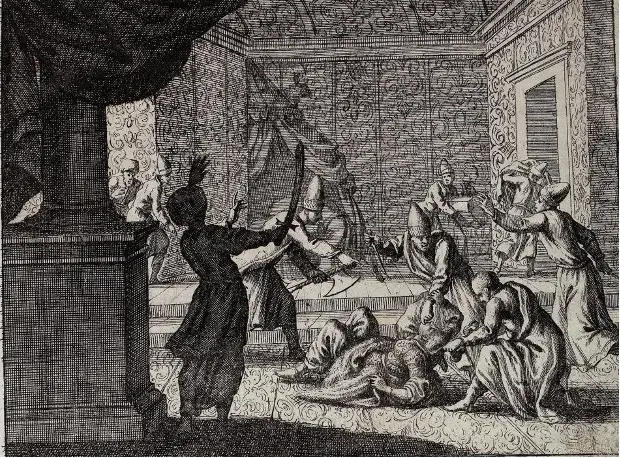
Engraving of the murder of Kösem Sultan by Paul Rycaut, ca. 1694,
Source: Wikimedia Commons
After Ibrahim’s murder, his 6-year-old son Mehmed IV was put on the throne. As a child, Mehmed was to rule through a regent. Naturally, this would be his mother, Hatice Turhan Sultan. However, Kösem refused to relinquish power so easily, and a dangerous rivalry began between the two women.
Hatice Turhan was the official Valide Sultan, and therefore had more right to power. To counteract this, Kösem had herself declared Büyük (elder) Valide. The court also became highly factionalised due to this competition; Hatice Turhan wanted Siyavush Pasha to become the grand vizier, while Kösem preferred Melek Ahmet Pasha, the husband of her granddaughter Kaya Sultan.
This rivalry, and the political turmoil that followed, was possibly a major factor that led to the assassination of Kösem. In 1651, eunuchs entered Kösem’s quarters and strangled her to death, according to some accounts with her own braids. The news of Kösem’s death caused a degree of civil and social disorder. Crowds gathered near Topkapi Palace demanding revenge on Kösem’s murderers, and the city went into mourning for three days.
Another Side to the Queen?
Kösem has been depicted in various ways throughout the ages. Her contemporaries, too, had differing views about her. Venetian ambassador Contarini said that she was generally respected. English traveller George Sandys, however, noted that she had an unnatural influence over the Sultan because she was a “witch”.
Kösem was also a controversial figure amongst the local populace. Prominent Ottoman theologians and statesmen argued that her immense wealth was a result of financial abuse in a period that saw poverty and inflation.
Others praised her charitable acts; Kösem built mosques, fountains, madrasas (institutes of theological teaching) to be built in Ottoman architectural style around the empire. As a former slave, she perhaps even felt some sympathy towards other enslaved women. Ottoman historian Mustafa Naima (d.1716) wrote that Kösem would free her female slaves after 2–3 years of service. Additionally, she would give them an annual wage, and have them married.
Like other politically savvy women throughout history, Kösem was a product of her environment. This was a male-dominated world in which she had to fight to survive and prosper.
Further Reading:
Leslie Peirce, The Imperial Harem: Women and Sovereignty in the Ottoman Empire, (New York: Oxford University Press, 1993).
Günhan Börekçi, Factions and Favorites at the Courts of Sultan Ahmed I (r. 1603–17) and His Immediate Predecessors, (PhD diss., The Ohio State University, 2010).
Mücteba İlgürel, “Kösem Sultan,” TDV İslâm Ansiklopedisi
Aylin Görgün-Baran, 'A Woman Leader in Ottoman History: Kösem Sultan (1589–1651)', in Ş. Erçetin (eds), Women Leaders in Chaotic Environments: Lecture Notes in Social Networks, (Springer, 2010).
Dror Ze’evi, 'Sultanas of the Ottoman Empire', in, Queens Around the World, 1520–1620, (Palgrave Macmillan, 2024).

Authored by:
Hilal Nur Kuyruk
Historian/ Author